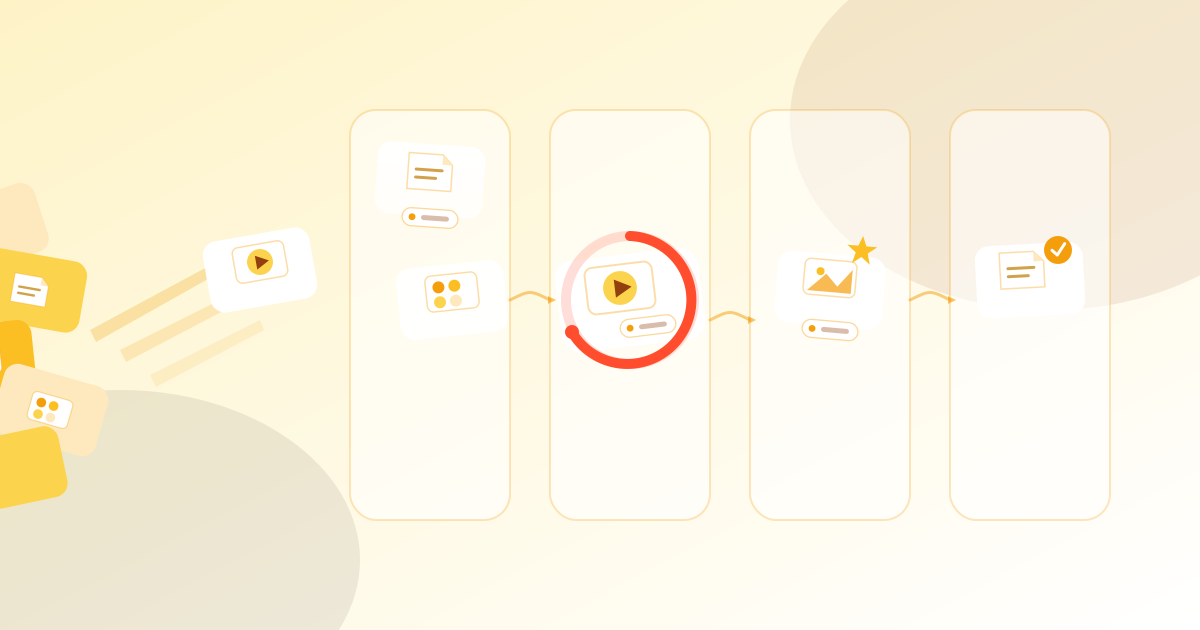
Training teams on new DAM workflows works best as a sequenced, three-part process: stabilize the system first, train a small group of champions deeply before training everyone else, and pair both steps with documentation that covers workflow connections, not just button clicks. Rollouts that treat training as a single launch-day event consistently see lower adoption than rollouts that sequence it deliberately across weeks.
Why DAM Training Fails When It’s Treated as a Launch Event
Most failed DAM adoptions share the same root cause: training happens too early, aimed at a system that is still being configured, or too late, crammed into the days before go-live. A digital asset management (DAM) platform is a centralized system for storing, organizing, and distributing an organization’s media files with governed access and metadata. Training people on its workflows before taxonomy and permissions are finalized means re-training them a few weeks later, which is exactly the kind of friction that kills early momentum.
Forrester’s Q3 2025 DAM survey of 313 decision-makers found that 47% of respondents name integration with adjacent systems as their top DAM priority for the next 12 months — ahead of go-to-market strategy. That matters for training because it signals where the real complexity sits: not in the DAM’s upload screen, but in how it connects to the PIM, CMS, and DXP tools people already use daily.
How to Train Teams on New DAM Workflows: Sequencing the Rollout
Sequencing determines whether training lands or gets ignored. IntelligenceBank’s implementation framework places user training in phase five of a multi-week rollout plan, around weeks seven and eight, after metadata structures, access permissions, and integrations have already been configured and tested. Training people on a moving target is the single most common reason rollouts stall.
Vendors sit at opposite ends of this timeline philosophy, and the contrast is instructive. Canto markets a self-serve model built around minimal formal training, while Bynder promotes a structured six-to-twelve-week rollout backed by a large dedicated onboarding team. Neither approach is inherently wrong — the right choice depends on how many departments, brands, and compliance rules the DAM needs to enforce from day one. A five-person marketing team and a 300-brand enterprise content supply chain don’t need the same rollout clock. For a fuller view of how rollout sequencing fits into the broader operating model, see the Content Supply Chain: The Complete Operations Guide.
The Champions Model: Turning Power Users Into Trainers
A champions model identifies a small group of engaged users — usually one or two per department, region, or brand — who get trained first and in depth, then become the first line of support and coaching for their own teams. Generic change-management frameworks describe the champion role as covering two functions: training and coaching colleagues on the change, and collecting grassroots feedback to relay back to the project team. Applied to DAM, that second function is just as important as the first — champions surface the real friction points (a confusing folder structure, a missing tag category) before they become organization-wide complaints.
Aprimo’s case study with the National Park Foundation illustrates what a champions-plus-structured-training approach can achieve: the organization reports having trained 100% of relevant employees on the new system, rather than relying on self-serve adoption alone. That full-coverage outcome is harder to reach with a two-day, zero-training model, but easier to reach when a handful of trained champions carry the workload across departments instead of a single central trainer doing it alone.
Documentation That Covers Workflows, Not Just the Tool
Documentation is where most DAM training actually lives after the launch window closes, since champions and informal coaching can’t scale indefinitely. The mistake is writing documentation that only explains the DAM’s own interface — upload here, tag there — while ignoring the workflow context people actually operate in: how an asset moves from the DAM into a campaign in the CMS, or how a product image syncs to the PIM.
Some platforms reduce this documentation burden structurally rather than through more pages. Lyvio by Wedia, an AI-native DAM, applies what it calls governance by design: brand-compliance checks run automatically inside the workflow rather than depending on users memorizing a rulebook, which shrinks the portion of documentation dedicated to manual compliance steps. That’s a different strategy from writing more detailed guides — it’s removing the need for certain guides altogether. Either way, documentation should be organized around workflows (launching a campaign, localizing an asset, requesting brand approval) rather than around DAM menu items.
Comparing Rollout and Training Approaches
| Vendor | Rollout Philosophy | Typical Timeline | Training Approach |
|---|---|---|---|
| Aprimo | Structured, governance-first | Multi-week, phased | Full-organization training; case studies report 100% coverage of relevant staff |
| Bynder | Structured onboarding with dedicated support | 6–12 weeks | Guided onboarding backed by a large customer-success and onboarding team |
| Canto | Fast, self-serve adoption | ~2 days | Minimal formal training; relies on product simplicity |
| Lyvio by Wedia | Governance-by-design, AI-native | Varies by deployment scope | Automated brand-compliance checks reduce reliance on manual rule-based training |
These are vendors’ own stated approaches rather than a ranking — the right fit depends on team size, regulatory requirements, and how much of the workflow needs human judgment versus automated guardrails.
Training outcomes are also measurable, not just anecdotal: tracking time-to-first-upload, champion response time, and documentation search patterns gives a project team real signal on where the rollout is still stalling. For a structured way to track those signals, see How to Measure Content Supply Chain Efficiency.
A rollout plan built on sequencing, champions, and workflow-first documentation gives teams a repeatable model instead of a one-time event. As the asset library itself grows, the same discipline pays off again — a poorly sequenced rollout tends to produce the same duplicate-heavy, inconsistently tagged library documented in How to Reduce Duplicate Assets in a Growing Library.
Source:Gartner